Quick answer
In Texas, visible mold covering less than 25 contiguous square feet can be cleaned up without a license. Larger areas need a TDLR-licensed mold assessor and a separate licensed remediator. Fix the moisture source first, or the mold comes back.
Why mold follows water damage
Mold needs moisture and something to feed on: drywall paper, wood, carpet backing and dust. A leak that isn't dried properly gives it both. The Texas Department of Insurance warns that mold can start within a day, which is why fast drying after a burst pipe or ceiling leak matters so much.
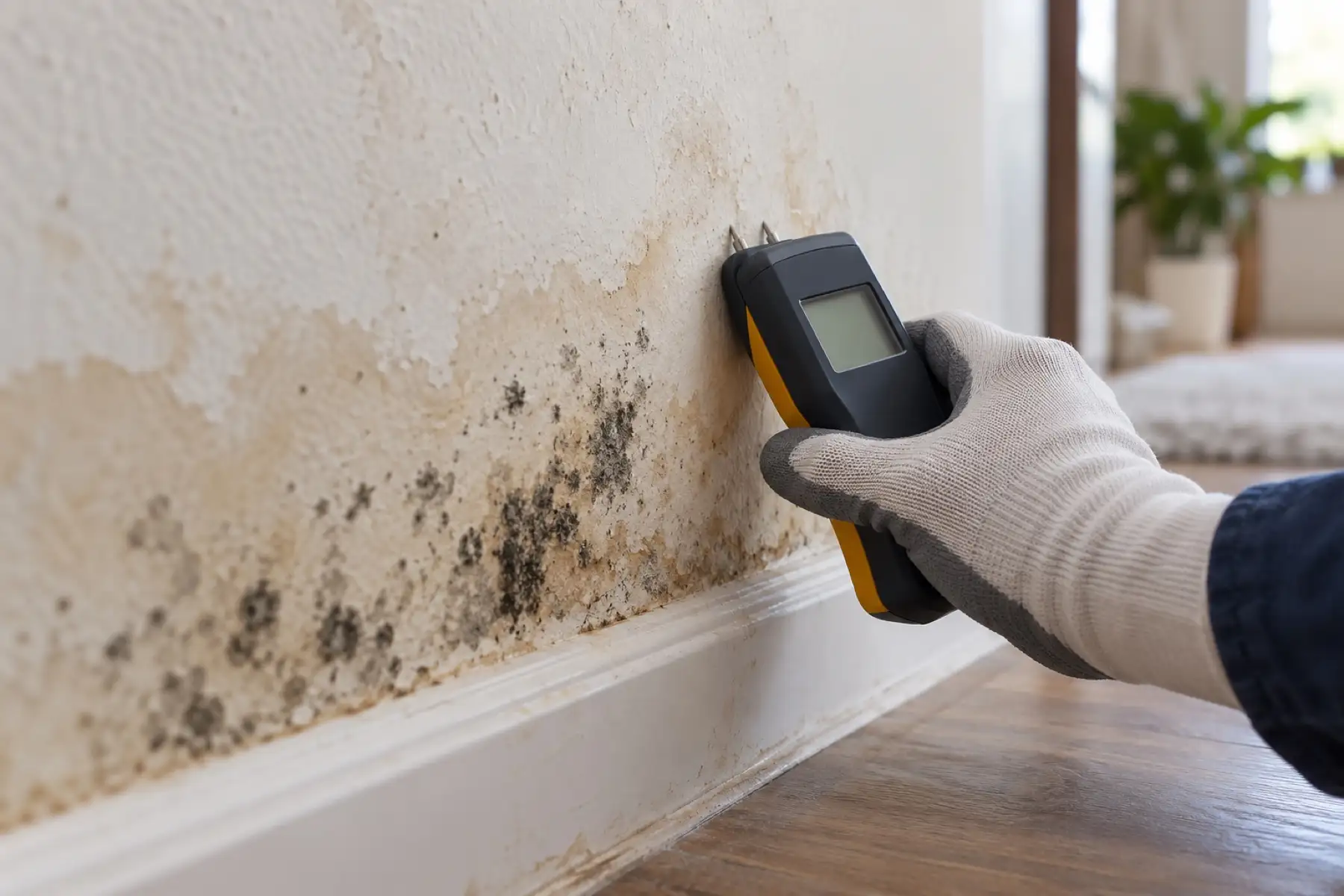
Signs to look for: a musty smell, dark spots on drywall or baseboards, peeling paint, or warped flooring near where water was.
What Texas law says
Mold work in Texas is regulated by the Texas Department of Licensing and Regulation (TDLR).
- The 25 square foot rule. Areas of visible mold under 25 contiguous square feet can be cleaned up by people who are not licensed. Larger jobs need licensed mold assessment and remediation, with some exemptions for homeowners working on their own home.
- Two separate companies. A licensed mold assessor writes the protocol and a different licensed remediator does the removal. The same license holder can't do both on one project.
- A certificate at the end. After a licensed job passes clearance, the remediator can issue a Certificate of Mold Damage Remediation (CMDR). Keep it; it can matter when you sell the home or renew insurance.
You can check any license on TDLR's license search.
How licensed remediation works
- Assessment. A licensed assessor inspects, may take samples, and writes a protocol: what has to be removed and how.
- Containment. The remediator seals off the area with plastic and uses negative air pressure, so spores don't spread to the rest of the house.
- Removal. Moldy drywall, insulation and carpet are removed and bagged; framing is cleaned.
- Drying and clearance. The area is dried, then the assessor checks it passes before rebuilding.
Small patches you can handle
For a small area, well under 25 square feet, on a hard surface, you can usually clean it yourself: wear gloves and a mask, clean with detergent and water, and dry it completely. If the material is soft and soaked, like drywall or carpet pad, it usually needs to be removed rather than cleaned. And if the mold keeps coming back, the moisture source hasn't been fixed.
Insurance and mold in Texas
According to the Texas Department of Insurance, mold on an item damaged by a covered water loss, such as a burst pipe, is covered as part of that claim. Most policies exclude mold cleanup and testing beyond that, and neither flood damage nor mold from a flood is covered by a standard home policy. Report water damage promptly; waiting can turn a covered loss into an excluded one.
Questions to ask a mold company
- What is your TDLR license number? (Then check it.)
- Who is the separate assessor, and will you follow their written protocol?
- How will you contain the area during removal?
- Will you provide a CMDR when the job passes clearance?
Sources: TDLR mold FAQ · TDLR mold laws and rules · TDI: water damage and mold coverage
Last reviewed against the official sources linked on this page.