Quick answer
Don't clean blood or body fluids yourself. A biohazard cleanup company removes and disposes of contaminated materials and disinfects the area. If the cleanup follows a crime, the Texas Crime Victims' Compensation program can reimburse up to $2,250, paid after any insurance.
When you need biohazard cleanup
- Unattended death, where a person passed away and wasn't found for some time.
- Suicide, homicide or violent injury scenes, once police release them.
- Blood or body fluids from an accident or medical event at home.
- Sewage that has spread through living areas (see water extraction).
Why it shouldn't be a family job
Blood and body fluids can carry bloodborne pathogens. They soak into carpet, pad, subfloor and drywall much further than what is visible. Cleanup crews use protective equipment, remove and seal contaminated materials, disinfect what stays, and test that the area is clean.
Disposal matters too. In Texas, medical waste, which includes bulk blood and body fluids, falls under state rules administered by the Texas Commission on Environmental Quality. A cleanup company should be able to tell you how and where contaminated material will be disposed of.
There is also the emotional side. Many families find it very hard to enter the room again. Letting a professional team handle it is a reasonable choice, not a failure.
Paying for it: Texas Crime Victims' Compensation
If the cleanup follows a crime, the Texas Attorney General's Crime Victims' Compensation (CVC) program can reimburse up to $2,250 for crime-scene cleanup. It can cover professional cleaning, or supplies if the family cleans. CVC pays after any insurance, so file with your homeowner or renter insurance first. Ask the cleanup company whether they have worked with CVC claims before.
What a cleanup company will do
- Assess the area privately and explain what needs to be removed.
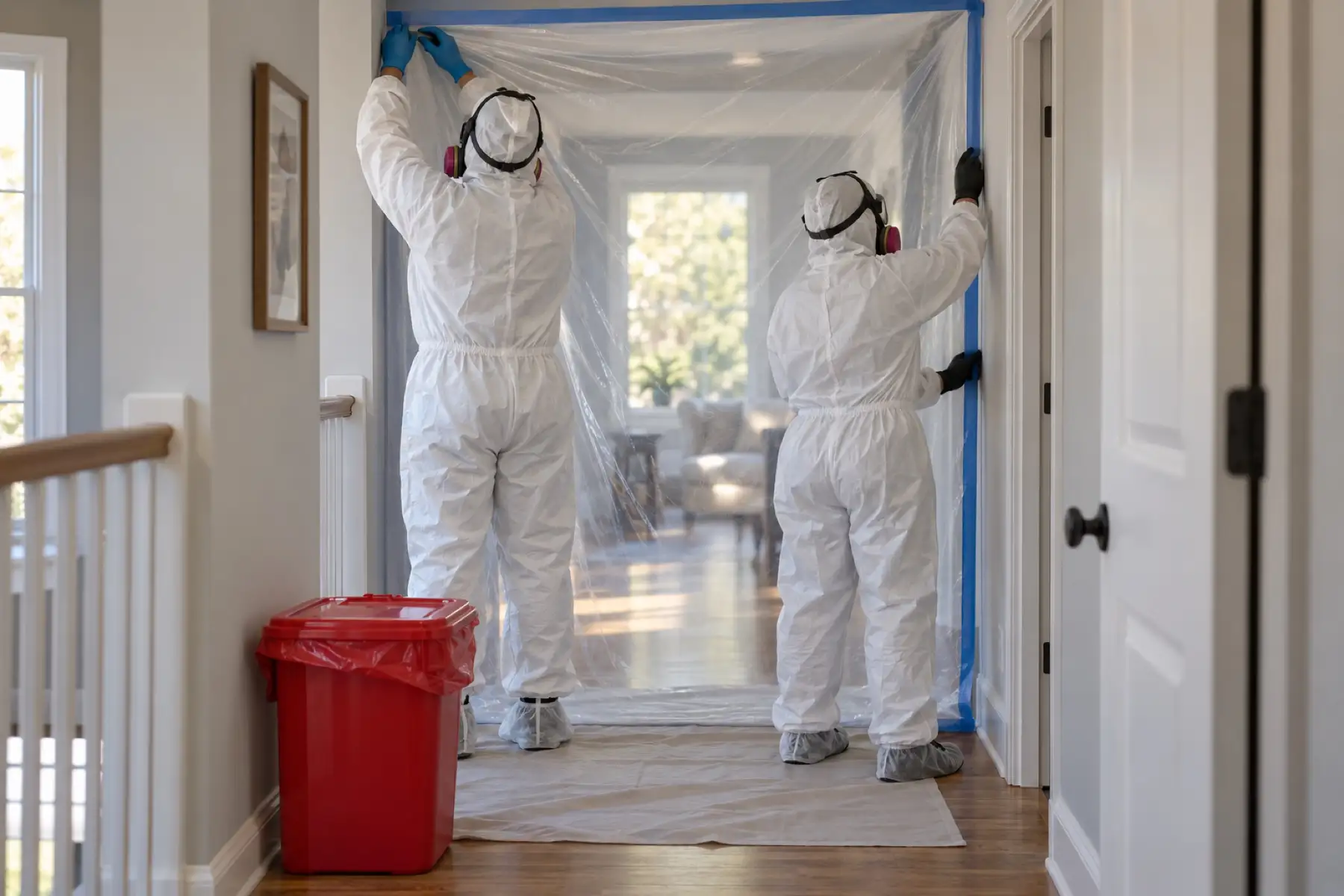
- Contain the area so contamination doesn't spread.
- Remove and bag contaminated materials for proper disposal.
- Clean and disinfect surfaces, then deal with any odor.
- Leave the area ready for repair, and give you documentation for insurance or CVC.
Questions to ask
- How will contaminated materials be disposed of?
- Will you work with my insurer, or with a CVC claim?
- Can you arrive in an unmarked vehicle?
- What will be removed, and what will be cleaned and kept?
Ask any cleanup company about their training, protective equipment and how they handle disposal before work starts.
Sources: Texas Attorney General, crime-scene cleanup reimbursement · TCEQ, medical waste definitions
Last reviewed against the official sources linked on this page.