Quick answer
Stop the source, keep people and pets away, and work out what kind of water it is. Clean water from a supply line can usually be dried in place; grey water and sewage mean contaminated materials have to be removed. Fast extraction with professional equipment cuts drying time and tear-out.
Know what kind of water you have
Restoration companies sort water into three categories, and the category changes the cleanup.
- Clean water from a supply line, faucet or burst pipe. Most materials can be dried if work starts quickly.
- Grey water from a washing machine, dishwasher or toilet overflow without waste. It contains contaminants, so pad and some materials are usually removed.
- Black water: sewage, or water from outside that has run across the ground. It carries bacteria; porous materials it touches are usually removed and the area is disinfected.
Clean water doesn't stay clean. After a day or two in a warm house, it starts to grow bacteria, which is why speed matters even for a simple supply-line leak.
Sewer backups in Bedford
If water is coming up through a floor drain, tub or toilet, it may be a sewer backup. The City of Bedford asks residents to call Public Works. If the blockage is on the private side of the line, the homeowner has to hire a plumber. Either way, treat the water as black water: keep people out and don't try to clean it with household tools.
Find the current numbers on the Bedford Public Works page.
What extraction involves
- Inspection. Moisture meters map the wet area, which is usually bigger than what you can see.
- Extraction. Powerful extractors pull water out of carpet and pad. Weighted extraction tools squeeze water out of carpet in place.
- Removal. Saturated pad, and baseboards or drywall that wicked up water, are removed where needed.
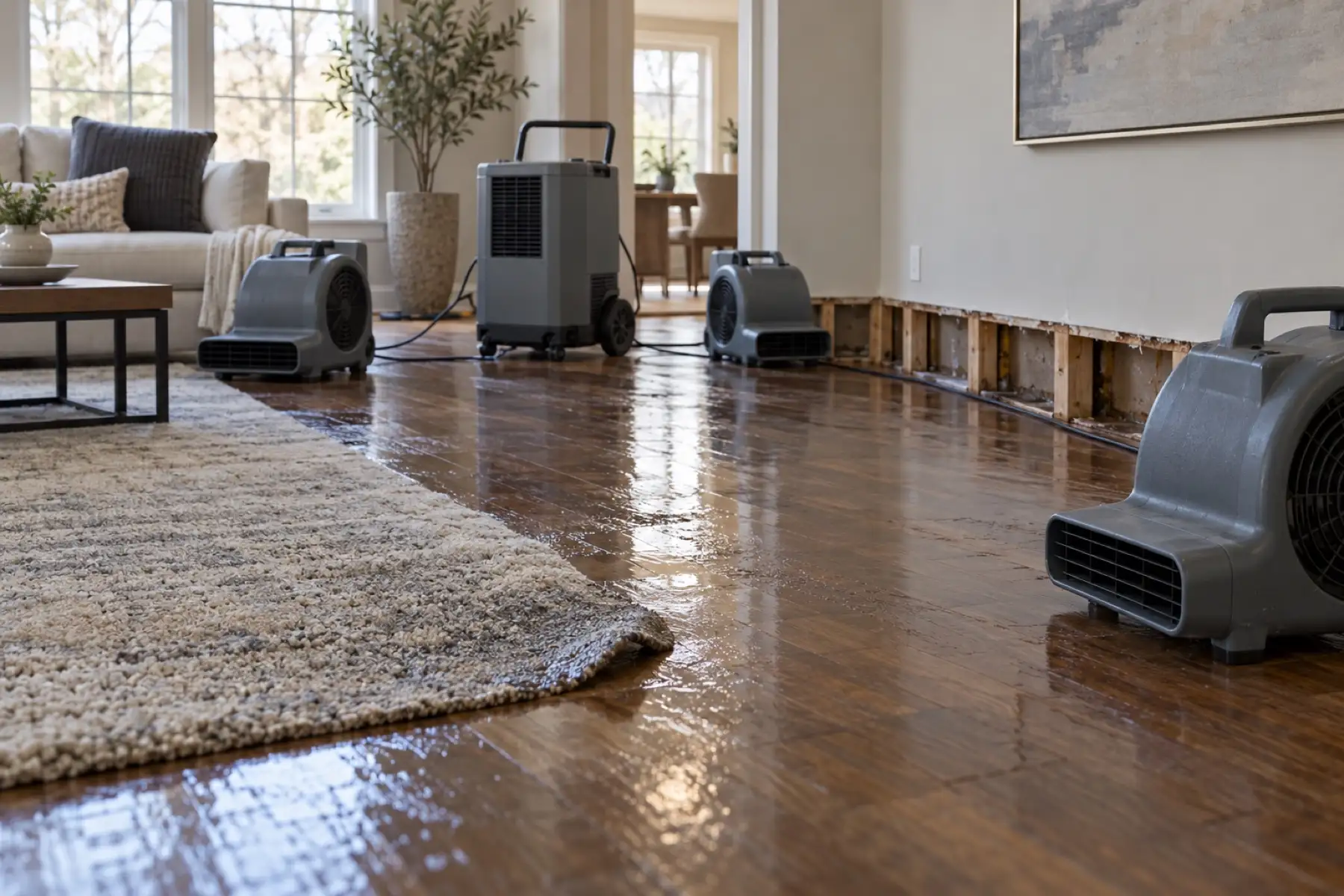
- Drying. Air movers and dehumidifiers run, usually for several days, with daily moisture readings.
- Cleaning. Surfaces are cleaned, and disinfected after grey or black water.
Why fast extraction saves money
Every hour water sits, it spreads further into subfloors, drywall and furniture. Pulling out as much as possible early cuts drying time and the amount of material that has to be torn out. The Texas Department of Insurance also expects homeowners to take reasonable steps to prevent more damage after a loss, and warns that mold can start within a day.
Questions to ask before you sign
- What category of water do you think this is, and what will you remove because of it?
- Can the carpet be dried in place, or does it need to go?
- How many days of drying do you expect, and who checks the readings?
- Can I have a written estimate for my insurer?
Sources: City of Bedford water and sewer FAQ · TDI: water damage and mold coverage
Last reviewed against the official sources linked on this page.