Quick answer
Wait until the fire department says the house is safe, call your insurer, secure broken windows and roof openings, and photograph everything before cleanup. Don't wipe soot or run the HVAC system. Professional cleanup deals with soot, smoke odor and the water left from firefighting.
Three kinds of damage at once
Soot
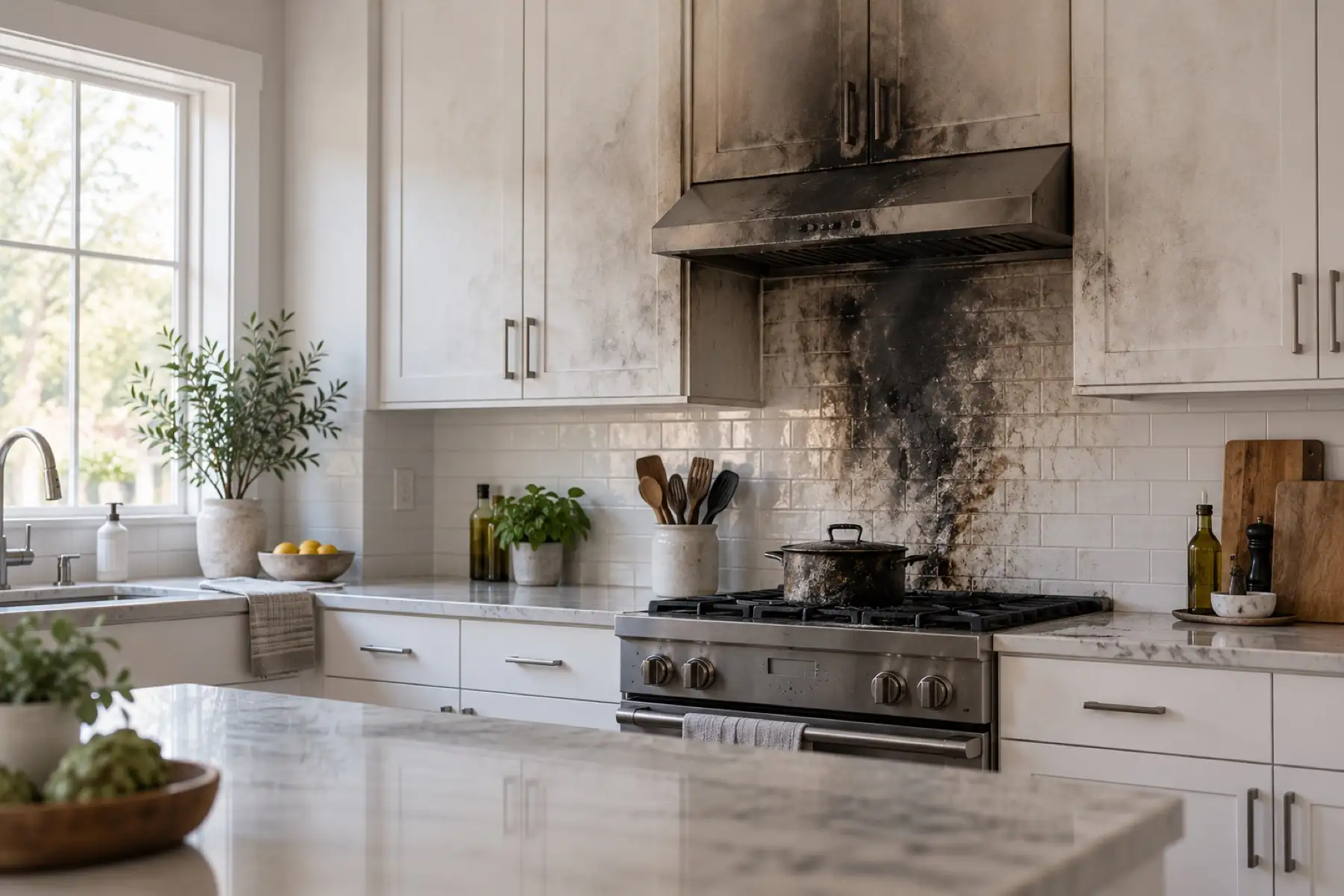
Soot is acidic and spreads to rooms the fire never reached. Left on surfaces, it can stain and etch paint, grout, metal fixtures and glass. Different fires leave different residues: a fast, hot fire leaves dry, powdery soot; a smoldering fire or burning plastic leaves oily soot that smears.
Smoke odor
Smoke gets into everything porous: carpet, curtains, mattresses, clothing, insulation and the HVAC system. Odor removal means cleaning or removing those materials first, then deodorizing the air and the structure.
Water
The water used to put out a fire soaks into drywall, subfloors and carpet. It needs the same extraction and drying as any other water damage.
What to do in the first 48 hours
- Stay safe. Fire-damaged floors, stairs and ceilings can be weak. Wear a mask and gloves if you have to go in.
- Secure the home. Broken windows and holes in the roof need boarding or tarping to keep out rain and intruders. Most insurers expect you to prevent further damage.
- Document. Photos and video of every room, closet and the outside of the home before cleanup.
- Keep receipts for hotel stays, meals and supplies; ask your insurer what your policy pays for living costs.
- Leave the HVAC off until the ducts and filter have been checked, so soot doesn't spread through the house.
What a restoration company will do
- Board up and tarp openings, if needed.
- Remove water and start drying.
- Clear out debris and items that can't be saved, with a list for your insurer.
- Clean soot from walls, ceilings and contents with methods matched to the residue.
- Treat odor, which may include cleaning the ductwork and sealing surfaces before repainting.
Questions to ask before you sign
- Will you give me an itemized estimate my insurer can review?
- How will you handle contents, cleaning them or listing them as lost?
- How will you remove the odor, rather than mask it?
- Who does the rebuild work, and is that a separate contract?
If someone was hurt or died in the fire, the cleanup may involve biohazards. See biohazard and trauma cleanup.
Last reviewed against the official sources linked on this page.